The Challenge
A commercial customer request could move through reception,
customer service, rates, operations, documentation, billing,
accounting, external providers, and multiple communication channels
before the work was complete.
Each transition created another opportunity for information to be
delayed, duplicated, misunderstood, misplaced, or disconnected
from the person ultimately accountable for the customer.
My Role
My role was to look beyond individual departments and understand
the commercial order process as one connected organizational system.
I worked with managers and staff to trace customer requests,
decisions, documents, communications, responsibilities, and
system interactions from the beginning of the process through
completion.
How I Approached It
Follow the Customer
Begin with the customer request and follow it through
every department, handoff, decision, and communication
until the process is complete.
Identify Ownership
Determine who owns each stage, when accountability changes,
and whether that responsibility is clearly understood.
Expose Failure Points
Look for duplicate work, communication delays,
unnecessary paper movement, unclear handoffs,
and places where information can be lost.
Use Technology Strategically
Identify where systems, automation, shared information,
and electronic communication can remove friction rather
than simply automate an inefficient process.
What the Analysis Revealed
10+
variables identified just to receive a request for service
8
identified handoff opportunities for a physical file
to be lost or partially lost
126
estimated staff minutes per day spent walking to fax
machines under one conservative scenario
The Broader Lesson
Improving one department would not have solved the underlying
problem. The customer experienced one organization, while
internally the work crossed many different departments,
systems, and owners.
Sustainable improvement required understanding the complete
process: how information moved, where accountability changed,
how people communicated, what technology supported the work,
and whether each step added value.
Lasting Impact
This way of working became central to how I approach organizational
problems. I rarely begin with the application, department,
or immediate symptom. I begin by understanding the system around it.
That same perspective continues to influence how I approach
enterprise systems, integrations, data, organizational change,
and process redesign.
Evidence & Examples
These examples show how the analysis moved from high-level
organizational relationships into detailed process flow
and failure-point identification.
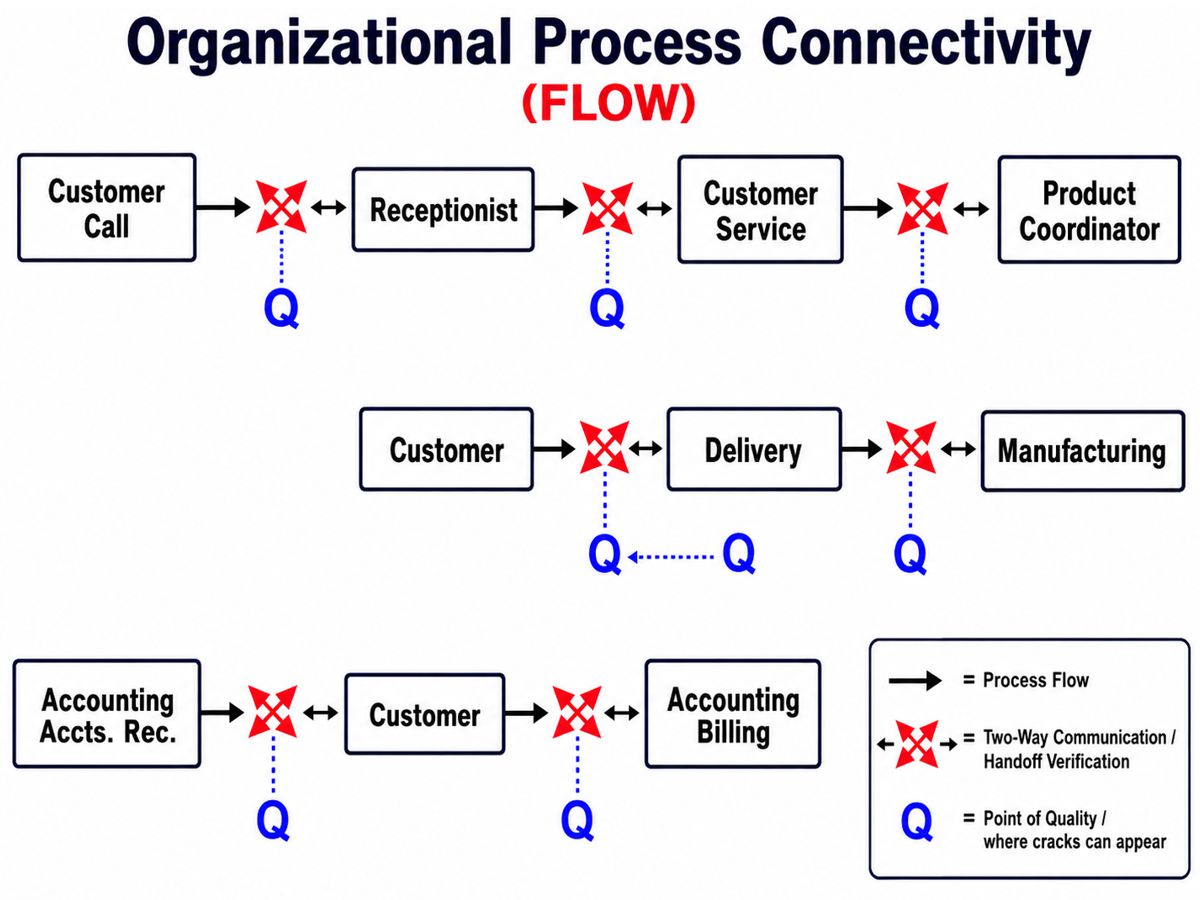
Organizational Customer Flow
Mapping internal customer and supplier relationships
across the organization.
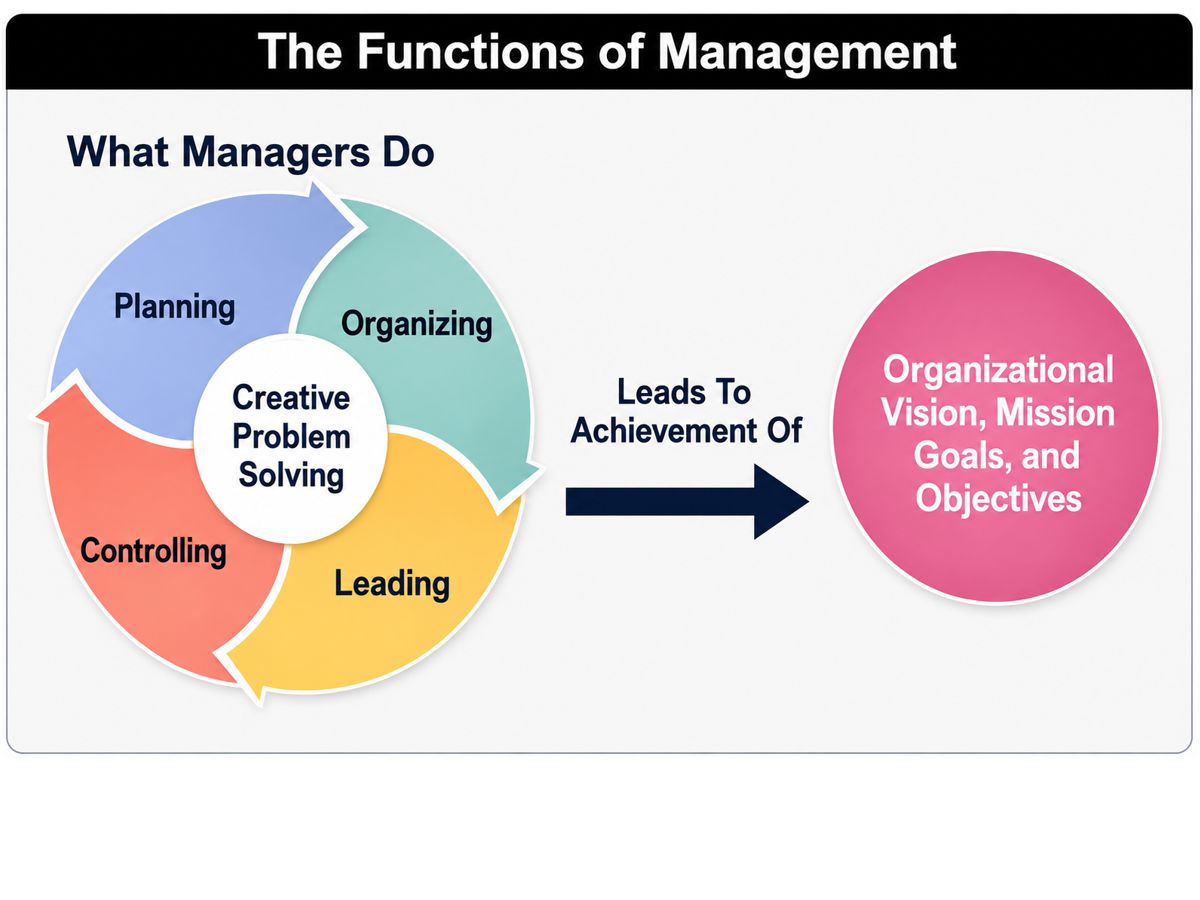
Management Functions and Organizational Alignment
Following a customer request across departments,
communications, ownership, and systems.