The Business Need
OCERS was replacing its existing PensionGold pension administration
system with V3, a new platform being implemented with an external
vendor team.
The project involved internal staff, vendor analysts, Microsoft
Project schedules, SharePoint documentation, defect tracking,
data-conversion work, reconciliation activities, requests,
decisions, and thousands of individual project tasks.
Managing those elements independently made it difficult to maintain
a single operational view of project status, ownership, dependencies,
risk, and progress.
What I Built
I developed TrackIT as a role-based ASP.NET application that connected
the major operational components of the pension-system replacement
project into one project-management environment.
TrackIT synchronized project-plan information maintained in Microsoft
Project and SharePoint, integrated project users and security information,
connected to project documentation, and exchanged defect information
with SmartBear.
The system provided both OCERS and vendor team members with tools for
task assignment, request management, defect tracking, decisions,
status reporting, data-conversion work, and reconciliation.
Key Capabilities
Project & Task Control
Track assignments, planned and actual dates, progress,
deadlines, project leads, status, and related project activity.
Request & Decision Management
Create, assign, track, and report project requests and decisions
alongside the tasks and work they affected.
Defect Management
Integrate SmartBear defect information with project tasks,
ownership, severity, status, reporting, and implementation work.
Data Conversion & Reconciliation
Support structured data-conversion, batch-processing,
record-conversion, and reconciliation activities associated
with migration from PensionGold to V3.
Connecting the Project Ecosystem
TrackIT did not replace the specialized tools already supporting
the project. It connected them.
Project Planning
Microsoft Project / SharePoint
↔
TrackIT
ASP.NET / SQL Server
↔
Defects & Project Data
SmartBear / Project Repositories
Project Governance
My TrackIT
Personalized access to tasks, weekly status reports,
requests, new work, and project notes.
Project Management
Central management of tasks, requests, defects, decisions,
assignments, progress, and project reporting.
Project Administration
Manage attributes, notifications, project leads,
user access, and SmartBear integration.
Conversion & Reconciliation
Organize the structured work required for data conversion,
batch processing, record conversion, and financial reconciliation.
Data & Integration
SQL Server served as the application's primary database, while
TrackIT synchronized and integrated information from the broader
project environment.
Project-plan information was maintained through Microsoft Project
and SharePoint. User and security information was integrated from
IT Central, the Personnel Data System, and Active Directory.
Project specifications, policies, test information, and supporting
documentation were maintained in SharePoint, while SmartBear
provided specialized defect-management functionality.
Technology
ASP.NET
VB.NET
SQL Server
T-SQL
Telerik UI
AJAX
jQuery
SharePoint
Microsoft Project
SmartBear
Active Directory
Selected Screens
Examples showing project execution, defect management,
and data-conversion reconciliation within TrackIT.
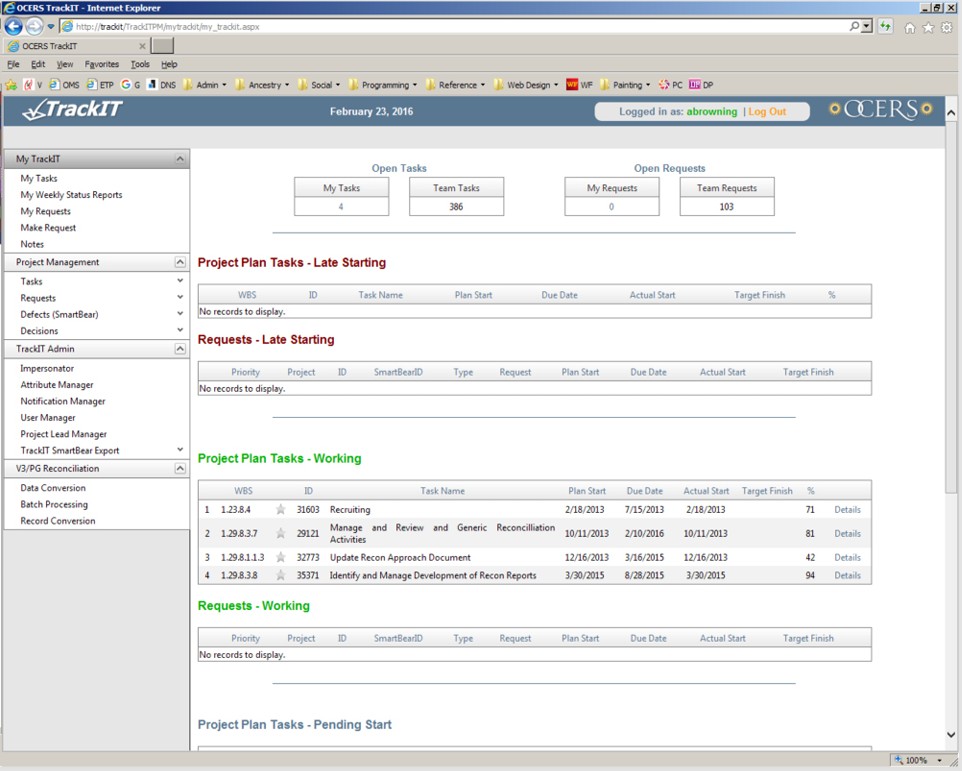
Project Execution Dashboard
A consolidated view of open tasks, requests, project-plan
activity, planned and actual dates, assignments, progress,
and work requiring attention.
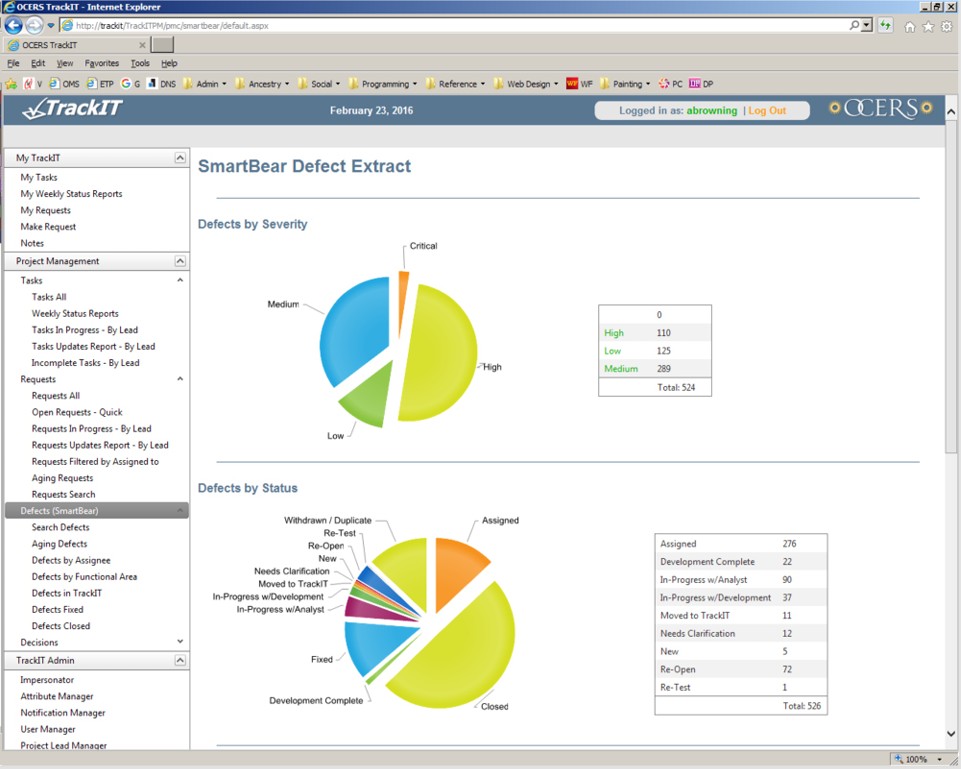
Defect Management
SmartBear defect information brought into the project
management environment for reporting by severity,
status, assignment, and lifecycle.
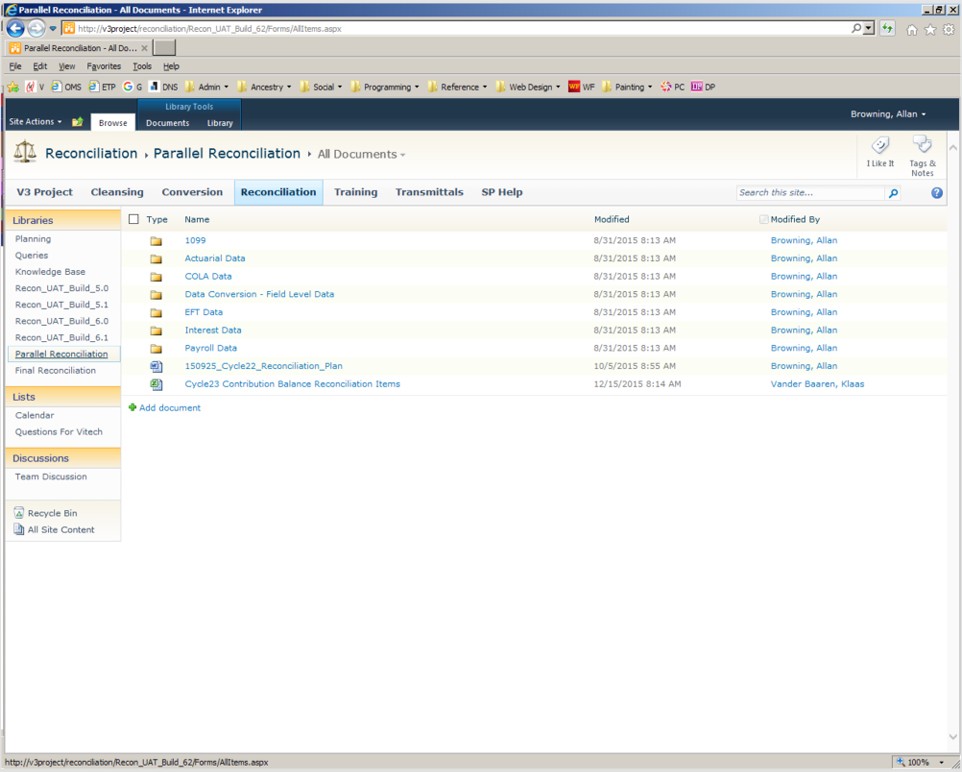
Data Conversion & Reconciliation
Structured SharePoint workspaces supported reconciliation
plans, converted data, test results, financial reconciliation,
queries, training, and project documentation.
Broader Value
Creating One Operational View of a Complex Project
TrackIT's value was not simply task tracking. It created a common
operational view across project planning, vendor activity, defects,
requests, decisions, documentation, conversion, reconciliation,
and day-to-day execution.
By connecting those elements, project participants could see how
individual work related to the larger implementation and management
could better understand ownership, progress, dependencies, and risk.